Tuscany Garden-Farm&Adventure
- 4.6
- Rating
- 1.00M
- Installs
- Free
- Price
 Analysis by App-foxy
I would make one decision before installing Tuscany Garden-Farm&Adventure: do I want a calm place to check in on, or a simulation that keeps giving me complicated new systems to master? That distinction matters more here than the farm theme alone. I see it as a gentle garden-and-adventure game, best for players who enjoy small visible improvements and can accept a gradual pace. It is less convincing if you want constant action, intricate production planning, or quick rewards every time you open a game.
The game has drawn over a million installs and has a 4.6 average from around twelve thousand ratings, which fits its approachable appeal. Those figures do not mean every farming fan will enjoy it: the loop is deliberately easy to enter, and the satisfaction comes from returning to a developing garden rather than mastering a demanding simulation. I would use the first few sessions to see whether that routine feels restful or repetitive before deciding how much time to give it.
What makes the garden loop work
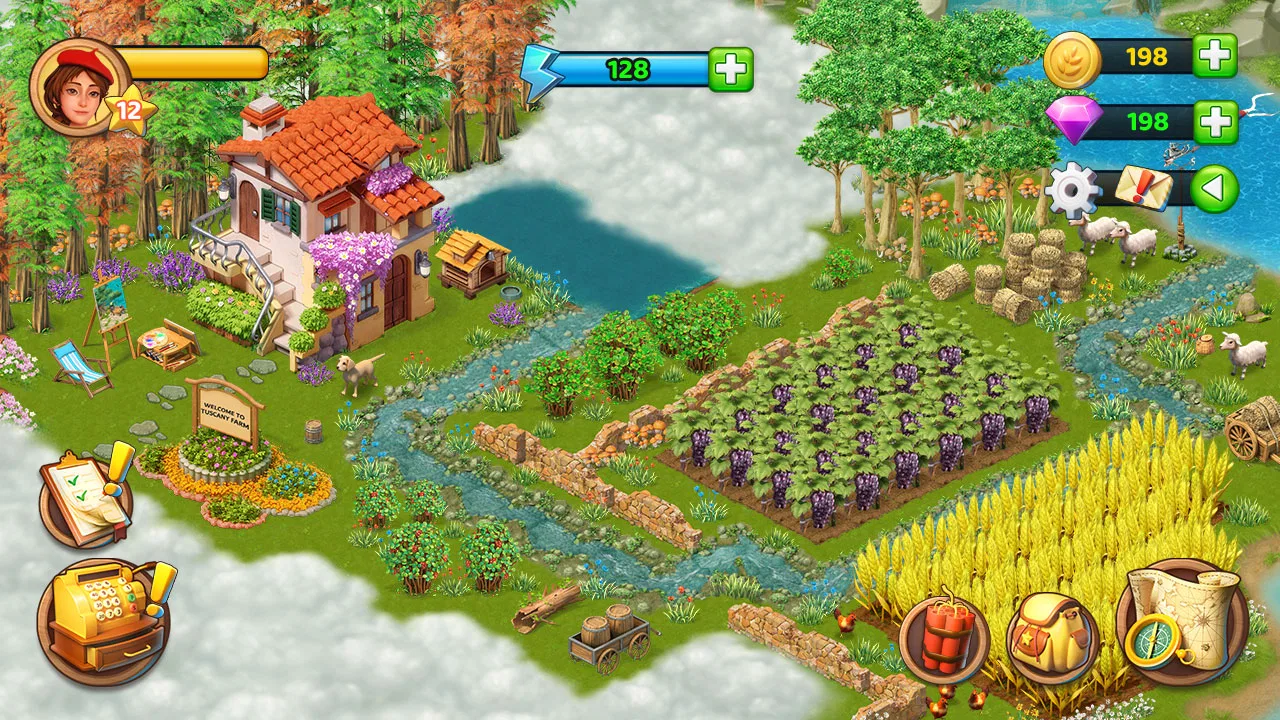
The strongest part of the experience is the way small actions feel connected. A garden is not just decoration: it becomes the visible record of your progress. Planting, collecting, and improving the space gives the game a satisfying rhythm because each visit can produce something tangible. I liked that sense of returning to a place that gradually feels more like mine instead of simply clearing isolated levels and moving on.
You May Also Like

 Blood Strike: 2.5 Anniversary
Blood Strike’s Loadouts Turn Every Drop Into a Tactical Gamble
A close look at Blood Strike’s custom loadouts: how fast access to signature weapons reshapes its battle royale rhythm, rewards preparation, and narrows the gap between fights.

 Pandora - Music & Podcasts
Pandora’s Music Is Easy to Start, but Harder to Recover
Pandora’s strength is its low-effort path from a seed to a station. Its weak spot is how much confidence it asks you to place in connection, setup, and quiet recovery.

 8 Ball Pool
 Is Built on Rivalries, Rematches, and Routine
A close look at the rivalries, rematches, shared routines, and unanswered safety questions that turn a quick pool match into a persistent mobile community.

 Samsung Music
’s Quiet Strength Is Playing What You Already Own
Its reach comes less from spectacle than from dependable access to a personal library. That simplicity is both the app’s strongest retention engine and its ceiling.

 AccuWeather: Weather Radar
AccuWeather Review: A Quick, Clear Forecast for Everyday Decisions
For everyday plans, the best forecast is the one you can understand quickly. AccuWeather makes rain timing, radar, and local conditions easy to act on, with a few trade-offs.

 Hill Climb Racing
Why Hill Climb Racing Still Turns Crashes Into One More Run
A tiny car, a bumpy hill and one more upgrade: Hill Climb Racing keeps resurfacing because its simple chaos makes every near-miss feel personal.
More From Our News Desk
View All News


The Tuscan setting also gives the presentation a warmer identity than a generic farm backdrop. Even when the activity is familiar, the theme helps the game feel like a calm escape. I found it particularly comfortable to play in short sessions, such as during a break or while waiting for an appointment. There is enough structure to make a few minutes worthwhile, but the game does not demand the same concentration as an action title.
One useful habit is to treat the garden as a planning space rather than tapping through every available action immediately. I found it more rewarding to decide which improvement would support my next objective and which resources were better saved. That small change in approach makes the simulation feel less like a sequence of chores. It also reduces the frustration that can come from spending materials impulsively and then waiting to rebuild a reserve.
The adventure side gives the farming routine a reason to continue. Instead of making the garden feel like an endless decoration project, it frames improvement as part of a broader journey. I enjoyed that relationship because it creates a gentle push forward: the garden is the comfortable home base, while the surrounding adventure supplies curiosity. Players who like decorating but need goals will probably appreciate this more than a purely open-ended garden toy.
A good fit for short, repeatable sessions
My favorite way to use the game was in a simple cycle. I would open it, check what had become available, make one or two sensible improvements, and then leave rather than forcing a long session. This approach suits the design better than trying to play continuously for hours. The game has a calm tempo, and stretching a short activity into a marathon can make the waiting and repetition more obvious.
That makes it a practical choice for someone who wants a low-pressure mobile game on an Android phone or tablet. It runs on devices using Android 6.0 or later, which keeps the potential audience fairly broad. The age guidance is Everyone 10+, so it can work as a family-friendly option for older children and adults, although younger players may still need help understanding spending choices.
The game is free to start, which makes trying the central loop straightforward. However, optional purchases range from $0.49 to $199.99 per item. That is an important part of the experience, not a footnote. I would recommend deciding in advance whether you want to play entirely without spending, allow only occasional small purchases, or avoid purchase prompts altogether. The game is much easier to enjoy when that boundary is clear before progress begins to feel slow.
Where the simulation feels rewarding
The most satisfying moments come from visible improvement rather than numerical optimization. A neglected plot becoming a more attractive and useful garden gives the player a clear sense of ownership. I also liked the way the setting supports that feeling: the garden is not presented as a sterile grid, so progress feels connected to a place with atmosphere.
A second strength is the game’s accessibility. Lor-game keeps the basic idea easy to grasp, which matters on mobile. You do not need to study a complicated manual before making progress. The familiar farming language helps new players settle in, while the adventure framing provides enough context to stop the experience from feeling like a checklist.
There is also a quiet strategic trade-off in how you spend attention. You can focus on making the garden look appealing, prioritize advancement, or try to balance both. Those goals are not always identical. I found that choosing one priority for a session made the game feel more manageable than trying to improve everything at once. Players who enjoy arranging spaces may naturally value appearance, while efficiency-minded players may prefer to think in terms of the next useful upgrade.
That is one of the less obvious pleasures here: the game can be played as a decorative project or as a light resource-management exercise, depending on what you notice. It does not become a hardcore strategy title either way, but the choice gives the routine more personality. I would not call the systems demanding, yet they are sufficient to reward a little planning.
How it compares with other farming games
Compared with a traditional farm-management simulation, this one puts more weight on atmosphere and the sense of a personal garden than on deep economic decisions. That is a useful distinction when choosing between games in the same broad category. If you enjoy weighing many production steps and optimizing a complex farm, I would look for a more systems-heavy alternative. If you would rather make a few approachable choices and see a place gradually improve, this is the more comfortable fit.
It also occupies a different space from purely decorative garden apps. The adventure framing gives progress a direction, so the experience is not only about making a pleasing scene. The trade-off is that players who want complete freedom to arrange a garden without progression goals may prefer an open-ended design tool. Here, I would treat decoration as one part of a broader routine, not assume it is the whole game.
A practical tip is to decide what counts as a satisfying session before opening it. I might choose one garden improvement or one step toward the next goal, rather than trying to clear every available activity. That keeps the game’s gentle structure useful and makes it easier to notice whether I am enjoying the loop itself or simply tapping out of habit.
The limitation that shapes the whole experience
The main weakness is pacing. A relaxed rhythm is part of the appeal, but the same rhythm can become friction when you want to move forward quickly. Repeated actions and gradual progress are comfortable at first; later, they may feel like barriers between you and the next interesting part of the adventure. This is where the free-to-play design becomes most relevant, because impatience can make optional spending look tempting.
I also think the game will feel too gentle for players who need constant novelty. If your ideal farm game is built around deep production chains, detailed market decisions, or demanding optimization, this is not the strongest choice. Likewise, if you want an adventure with fast combat or a tightly directed narrative, the garden routine may seem like it is taking up too much space.
Another trade-off is that the same simplicity that makes the opening approachable can limit long-term depth for experienced simulation fans. I enjoyed not having to manage a complicated spreadsheet, but I could also see advanced players reaching the point where the decisions feel familiar. The game works best when atmosphere, collection, and gradual improvement matter more to you than increasingly complex systems.
My practical advice is to avoid treating every available task as mandatory. Choose a small objective, complete it, and stop when the session starts to feel repetitive. This keeps the calm tone intact and prevents the game from turning into a second job. It is also a good way to judge whether the core loop suits you before considering any purchase.
Who should install it, and who should skip it
I would recommend this game to players who enjoy gentle farm simulation, decorative progression, and adventure themes without heavy pressure. It is especially suitable if you like checking in regularly, making visible improvements, and building a personal space over time. Someone who wants a pleasant mobile routine rather than a demanding challenge will probably get the most from it.
It is also a reasonable pick for a player who usually finds farming games too complicated. The basic goals are approachable, and the Tuscan presentation gives the experience a clear mood. If you are introducing an older child to this type of game, I would play alongside them at first and discuss the purchase options, particularly because the highest individual purchase tier is substantial.
I would steer competitive players elsewhere. There is no reason to choose this as your main game if you need rapid reactions, direct competition, or a constant stream of difficult decisions. I would also suggest looking at a more traditional farming simulator if your priority is detailed crop planning, elaborate crafting, or a highly intricate economy. Tuscany Garden-Farm&Adventure is more about a pleasant blend of garden ownership and exploration than technical simulation.
For a realistic everyday scenario, imagine having ten minutes before leaving for work. You can open the game, review the garden, make a targeted improvement, and leave with a small sense of completion. On a quieter evening, you might spend longer arranging priorities and following the adventure thread. That flexibility is a genuine strength, provided you accept that the game is designed around gradual progress rather than instant rewards.
Version, support, and the buying decision
The current version is 1.43.1, and the developer is Lor-game. I would keep the game updated through the normal app store process, especially if you plan to make it part of a regular routine. More importantly, I would decide how you feel about optional purchases before investing a lot of time. The free entry point is useful for testing the game, but the long-term experience depends on whether its pace feels relaxing or restrictive to you.
One question many players will have is whether they can enjoy it without paying. My answer is that the free starting experience makes that worth trying, but your patience matters. If you are comfortable with gradual progress and do not feel compelled to accelerate every goal, you can approach it as a no-cost garden hobby. If waiting quickly becomes irritating, the purchase structure may become a source of pressure rather than convenience.
Another likely question is whether it is better for decorating or advancing the adventure. In my experience, it supports both, but neither side completely dominates. The garden provides the strongest personal connection, while the adventure gives direction. I would choose it for the combination, not for one element in isolation.
My final question would be whether it is worth keeping installed after the first session. For the right player, yes. The game has enough atmosphere and routine to become a comfortable repeat visit, and its broad popularity is understandable. For players who need dense systems or rapid action, the answer is probably no, because the slow pace will remain a central part of the design rather than a temporary introduction.
Overall, Tuscany Garden-Farm&Adventure succeeds because it understands the appeal of a garden that gradually becomes your own. I recommend it to anyone who wants a free, approachable simulation with a warm adventure backdrop and room for short daily sessions. I would not recommend it to someone seeking a demanding farming economy or a fast-paced adventure. Its best quality is its calm sense of progress, and its biggest weakness is that the same calm can feel restrictive when patience runs out.
FAQs for Tuscany Garden-Farm&Adventure
01What is Tuscany Garden-Farm&Adventure about?
Tuscany Garden-Farm&Adventure is a casual farming and adventure game set in a colorful Tuscan countryside. You help restore a neglected garden and surrounding areas, grow crops, complete orders, decorate locations, and uncover the story through quests. The game combines relaxing farm management with exploration, character interactions, and gradual restoration of the villa and its gardens.
02Can I play Tuscany Garden-Farm&Adventure without an internet connection?
The game may allow some farming activities to continue during short periods offline, but an internet connection is generally recommended for the complete experience. Online access can be required for loading certain areas, synchronizing progress, receiving events, watching optional advertisements, and using social or cloud-related features. Availability of offline functions may also vary after updates.
03Is Tuscany Garden-Farm&Adventure free to download and play?
Tuscany Garden-Farm&Adventure is typically free to download, but it includes optional in-app purchases. These purchases can provide premium currency, boosters, energy, materials, or faster progress. You can play without spending money, although waiting timers and limited resources may make progression slower. Parents should review purchase settings if children use the device.
04What activities and features are available in the game?
Players can plant and harvest crops, produce useful goods, fulfill requests, expand the farm, restore gardens, and decorate the estate. The adventure side includes quests, story scenes, exploration, and interactions with characters connected to the Tuscan setting. Events and limited-time activities may add extra rewards, while energy and resource management influence how quickly tasks can be completed.
05What devices are compatible with Tuscany Garden-Farm&Adventure?
Compatibility depends on the version available through the Google Play Store or Apple App Store, as well as your device’s operating system and hardware. Before downloading, check the store listing for the current Android or iOS requirements and available storage. Because the game contains animated environments and many interactive elements, performance can vary on older phones and tablets.
Pros
- Relaxing garden restoration gameplay with a charming Tuscan setting.
- Combines farming
- decorating
- puzzles
- and light adventure in one experience.
- Progression feels rewarding as new areas and story elements unlock.
- Bright visuals and gentle music create a pleasant casual atmosphere.
- Playable in short sessions
- making it suitable for relaxed daily gaming.
Cons
- Energy limits can interrupt longer play sessions.
- Some upgrades and resources may require considerable waiting.
- Optional purchases can speed up progress or provide extra resources.
- Puzzle difficulty and variety may feel limited for experienced players.
- Requires regular tasks and harvesting to maintain steady progress.

Tuscany Garden-Farm&Adventure
Gallery